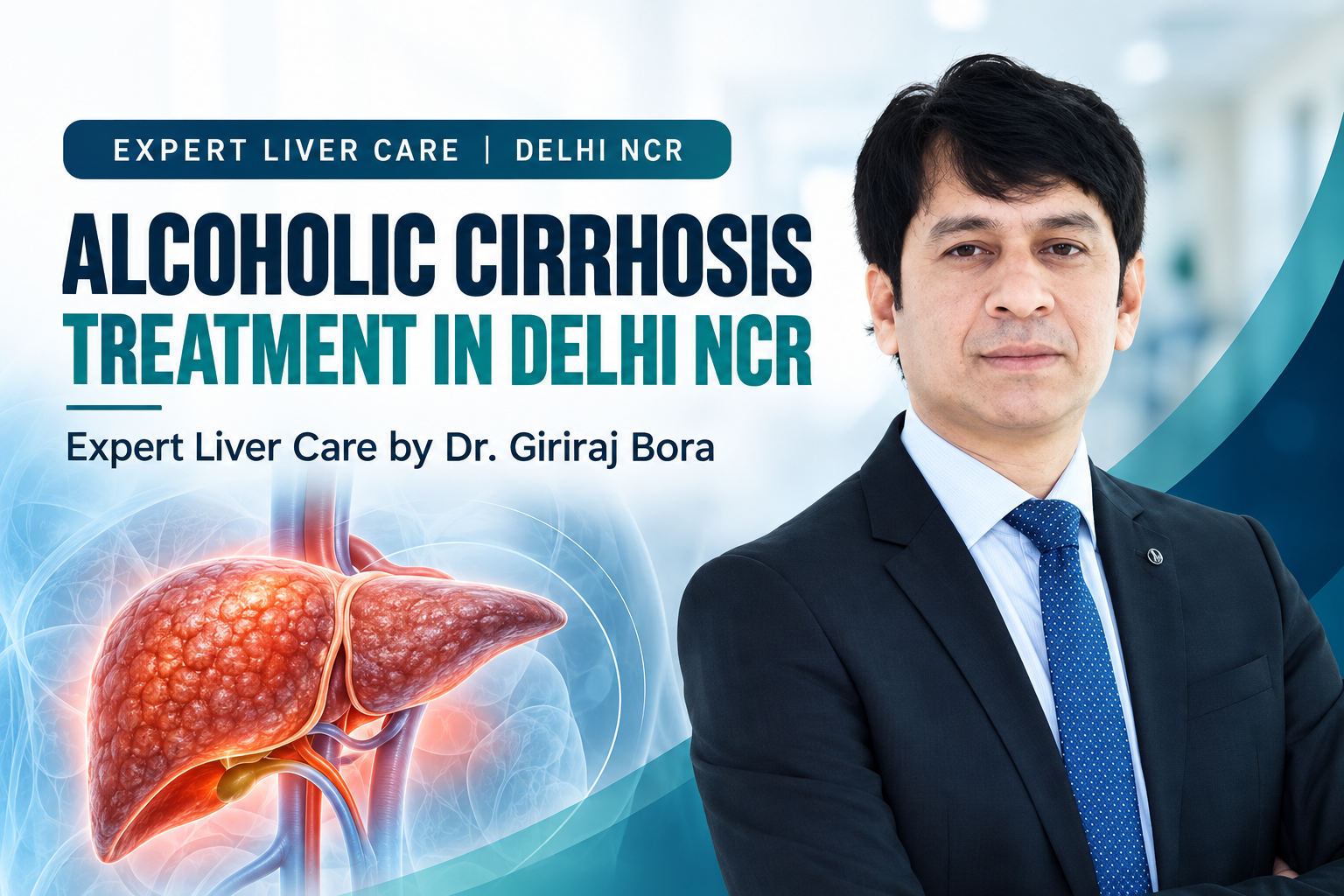
Alcoholic cirrhosis is an advanced stage of alcohol-associated liver disease in which prolonged alcohol-related damage causes permanent scarring of the liver. This scarring affects the liver’s ability to perform essential functions, including filtering toxins, producing important proteins, and regulating metabolism. Without appropriate treatment, alcoholic cirrhosis can lead to serious complications such as fluid accumulation in the abdomen, internal bleeding, liver failure, and liver cancer.
For patients seeking alcoholic cirrhosis treatment in Delhi NCR, early diagnosis, complete alcohol abstinence, effective management of complications, and timely evaluation for liver transplantation can make a significant difference to their health and quality of life.
Dr. Giriraj Singh Bora, a liver transplant and hepatobiliary surgery specialist associated with Artemis Hospital, Gurugram, provides expertise in the surgical management of advanced liver disease, including cases that may require liver transplantation.
What Is Alcoholic Cirrhosis?
Alcoholic cirrhosis, also known as alcohol-associated cirrhosis, develops when repeated liver injury caused by alcohol leads to extensive scar tissue formation. Over time, this scar tissue replaces healthy liver tissue and interferes with normal liver function.
The condition usually develops after prolonged harmful alcohol consumption, although the risk and rate of progression vary between individuals. Other factors, including obesity, viral hepatitis, diabetes, and existing liver disease, may increase the risk of liver damage.
In the early stages, patients may experience few or no symptoms. As the disease progresses, liver function may deteriorate and complications may develop. Although established cirrhosis-related scarring is generally irreversible, appropriate treatment can help prevent further damage, manage complications, and improve long-term outcomes.
Common Symptoms of Alcoholic Cirrhosis
The symptoms of alcoholic cirrhosis depend on the extent of liver damage. Some patients remain asymptomatic in the early stages, while others develop noticeable signs as the disease advances.
Common symptoms include:
- Persistent fatigue and weakness
- Loss of appetite and unintended weight loss
- Nausea or discomfort in the abdomen
- Yellowing of the skin and eyes (jaundice)
- Swelling of the legs and feet
- Fluid accumulation in the abdomen (ascites)
- Easy bruising or unusual bleeding
- Itching of the skin
- Confusion, drowsiness, or changes in behaviour due to hepatic encephalopathy
Seek emergency medical attention if a patient vomits blood, passes black stools, develops new confusion, or experiences rapidly worsening jaundice or abdominal swelling. These may indicate life-threatening complications.
How Is Alcoholic Cirrhosis Diagnosed?
Accurate diagnosis helps doctors determine the severity of liver damage and develop an appropriate treatment plan. The evaluation may include:
1. Medical History and Clinical Examination
The doctor reviews alcohol consumption history, existing medical conditions, symptoms, and signs of chronic liver disease.
2. Blood Tests
Liver function tests, bilirubin, albumin, blood counts, clotting tests, and kidney function tests help assess liver health and identify complications.
3. Ultrasound and Liver Imaging
Abdominal ultrasound may reveal changes in liver structure, an enlarged spleen, or fluid accumulation. Additional imaging, such as CT or MRI, may be recommended when clinically necessary.
4. Fibrosis Assessment
Elastography or other appropriate tests may help evaluate liver stiffness and the extent of scarring.
5. Endoscopy
An upper gastrointestinal endoscopy may be recommended to identify enlarged veins called varices, which can bleed in patients with portal hypertension.
6. Liver Biopsy
A liver biopsy is not necessary in every case. It may be considered when the diagnosis remains uncertain or when the results are likely to influence treatment.
The doctor may also investigate other causes of liver damage, including hepatitis B, hepatitis C, and metabolic liver disease.
Alcoholic Cirrhosis Treatment in Delhi NCR
Treatment depends on whether cirrhosis is compensated, meaning the liver is still managing its essential functions reasonably well, or decompensated, meaning serious complications have developed.
The primary goals are to prevent further liver injury, preserve remaining liver function, manage complications, and assess whether transplantation is necessary.
1. Complete Alcohol Abstinence
Stopping alcohol consumption completely is the most important step in treating alcohol-associated liver disease. Continued drinking can accelerate liver damage and increase the risk of complications.
Patients who find it difficult to stop drinking should receive professional support through addiction counselling, psychological care, and medically supervised treatment when required. Patients with alcohol dependence should not attempt to manage severe withdrawal symptoms without medical supervision, as withdrawal can be dangerous.
Sustained abstinence may improve liver function in some patients and is essential for protecting the remaining healthy liver tissue.
2. Medications to Manage Complications
There is no single medicine that reverses established cirrhosis. However, doctors may prescribe medications to manage specific complications, depending on the patient’s condition.
These may include:
- Diuretics to help manage fluid retention and ascites.
- Medicines to reduce the risk of bleeding from oesophageal varices.
- Lactulose and, when indicated, rifaximin to manage hepatic encephalopathy.
- Antibiotics for specific infections when prescribed.
- Vitamin and mineral supplements to correct documented deficiencies.
Medication selection requires careful assessment of liver and kidney function. Patients should avoid self-medication and consult their treating specialist before using painkillers, herbal preparations, or supplements.
3. Nutritional Support and Lifestyle Changes
Malnutrition is common in advanced liver disease and can contribute to muscle loss, weakness, and poor recovery.
A personalised nutrition plan may include:
- Adequate calories and protein, as advised by the treating team.
- Smaller, more frequent meals to maintain nutritional intake.
- A late-evening snack when recommended.
- Sodium restriction for patients with ascites, according to medical advice.
- Correction of nutritional deficiencies.
- Avoidance of alcohol and unverified liver-detox products.
Protein should not routinely be restricted simply because a patient has hepatic encephalopathy. Nutritional needs should be assessed individually by the treating doctor and dietitian.
4. Treatment for Ascites and Portal Hypertension
Ascites occurs when fluid accumulates inside the abdomen. It can cause discomfort, swelling, difficulty eating, and breathlessness.
Depending on the severity, treatment may involve sodium restriction, diuretics, drainage of abdominal fluid through a procedure called paracentesis, and evaluation for complications such as spontaneous bacterial peritonitis.
Portal hypertension can also cause enlarged veins in the oesophagus or stomach. Doctors may recommend medicines, endoscopic treatment, or other interventions to reduce the risk of serious bleeding.
Patients with recurrent or difficult-to-control complications may require assessment for advanced treatment options.
5. Regular Monitoring for Liver Complications
Patients with cirrhosis need ongoing follow-up even when they feel well. Monitoring helps identify complications before they become severe.
Follow-up may include:
- Periodic blood tests to assess liver and kidney function.
- Screening for liver cancer, commonly with liver ultrasound every six months, with additional testing where appropriate.
- Assessment for oesophageal or gastric varices.
- Review of nutritional status and medications.
- Vaccination against recommended infections, including hepatitis A and B when indicated.
The frequency and type of monitoring depend on the patient’s condition and individual risk factors.
When Is Liver Transplantation Needed for Alcoholic Cirrhosis?
Liver transplantation may be recommended when the liver becomes severely damaged and can no longer perform its essential functions adequately. It replaces the diseased liver with a healthy donor liver and may offer a life-saving treatment option for carefully selected patients with end-stage liver disease.
A liver transplant evaluation may be appropriate for patients who develop:
- Recurrent or difficult-to-control ascites
- Repeated episodes of hepatic encephalopathy
- Variceal bleeding
- Worsening jaundice or deteriorating liver function
- Progressive kidney dysfunction associated with advanced cirrhosis
- Other features of decompensated or end-stage liver disease
The transplant team evaluates overall health, the severity of liver disease, other medical conditions, social support, and the patient’s ability to maintain long-term alcohol abstinence.
A fixed period of sobriety should not be treated as the only criterion for transplant consideration. Eligibility is determined through a comprehensive, individual assessment according to the transplant centre’s protocols.
Liver Transplant Evaluation with Dr. Giriraj Bora in Delhi NCR
Dr. Giriraj Singh Bora specialises in liver transplantation and hepatobiliary surgery, with clinical expertise in the surgical management of complex liver conditions. For patients with advanced alcoholic cirrhosis, timely consultation with an experienced liver transplant team can help clarify the available treatment options.
A specialist assessment can help determine whether the patient may benefit from continued medical management, treatment of complications, or evaluation for liver transplantation.
Patients and their families should bring previous medical records, blood test results, imaging reports, endoscopy findings, and a list of current medications to the consultation. This information helps the treating team understand the disease’s progression and plan the next steps.
The treatment approach should be individualised, with an emphasis on medical safety, informed decision-making, nutritional support, and appropriate long-term follow-up.
Why Early Treatment Matters
Alcoholic cirrhosis is a serious condition, but early medical attention can help reduce avoidable complications. Patients who stop drinking, follow their treatment plan, maintain adequate nutrition, and attend regular follow-ups may improve their clinical stability and quality of life.
Even when cirrhosis is advanced, appropriate management can help control symptoms and identify patients who may benefit from liver transplantation.
If you or a family member has been diagnosed with alcoholic cirrhosis, consult a qualified liver specialist in Delhi NCR to understand the severity of the condition and the most appropriate treatment options.
Frequently Asked Questions (FAQs)
1. What is the best treatment for alcoholic cirrhosis in Delhi NCR?
Treatment depends on the severity of liver damage. Complete alcohol abstinence, nutritional support, appropriate medication, and management of complications are essential. Patients with advanced or decompensated cirrhosis may require evaluation for liver transplantation.
2. Can alcoholic cirrhosis be reversed?
Established cirrhosis involves permanent scarring that is generally not reversible. However, stopping alcohol and receiving appropriate treatment can improve liver health in some patients, slow disease progression, and reduce complications. The outcome depends on the extent of existing damage.
3. Is liver transplantation necessary for every patient with alcoholic cirrhosis?
No. Many patients can be managed with medical treatment and regular monitoring. Liver transplantation is considered when severe liver dysfunction or complications make it appropriate, following a detailed assessment by a transplant team.
4. How long can a person live with alcoholic cirrhosis?
Life expectancy varies considerably according to liver function, the presence of complications, other medical conditions, and continued alcohol use. Early-stage compensated cirrhosis generally has a better outlook than decompensated cirrhosis. A specialist can provide a more individualised assessment.
5. Can a patient with alcoholic cirrhosis undergo liver transplantation?
Yes, selected patients with alcohol-associated cirrhosis can undergo liver transplantation. Eligibility depends on the severity of liver disease, overall medical fitness, psychosocial assessment, and a sustainable plan for alcohol abstinence. The transplant centre determines suitability on an individual basis.
6. Which doctor should I consult for alcoholic cirrhosis treatment in Delhi NCR?
Patients should seek assessment from a liver specialist or hepatologist. Those with advanced cirrhosis or possible transplant indications should also be evaluated by an experienced liver transplant team. Dr. Giriraj Singh Bora specialises in liver transplantation and hepatobiliary surgery in the Delhi NCR region.
7. What are the warning signs of advanced alcoholic cirrhosis?
Increasing abdominal swelling, worsening jaundice, leg swelling, confusion, vomiting blood, and black stools may indicate serious complications. Vomiting blood, black stools, or new confusion require immediate emergency medical attention.
Conclusion
Alcoholic cirrhosis requires comprehensive, long-term care tailored to the severity of liver damage. Complete alcohol abstinence, appropriate medication, nutritional support, and regular monitoring form the foundation of treatment. When the disease progresses to end-stage liver failure, liver transplantation may be an important option for eligible patients.
For alcoholic cirrhosis treatment in Delhi NCR, timely evaluation by a liver specialist and, when needed, a liver transplant team can help patients and their families make informed decisions about care.
Consult Dr. Giriraj Singh Bora to discuss liver disease management and whether an assessment for liver transplantation may be appropriate.