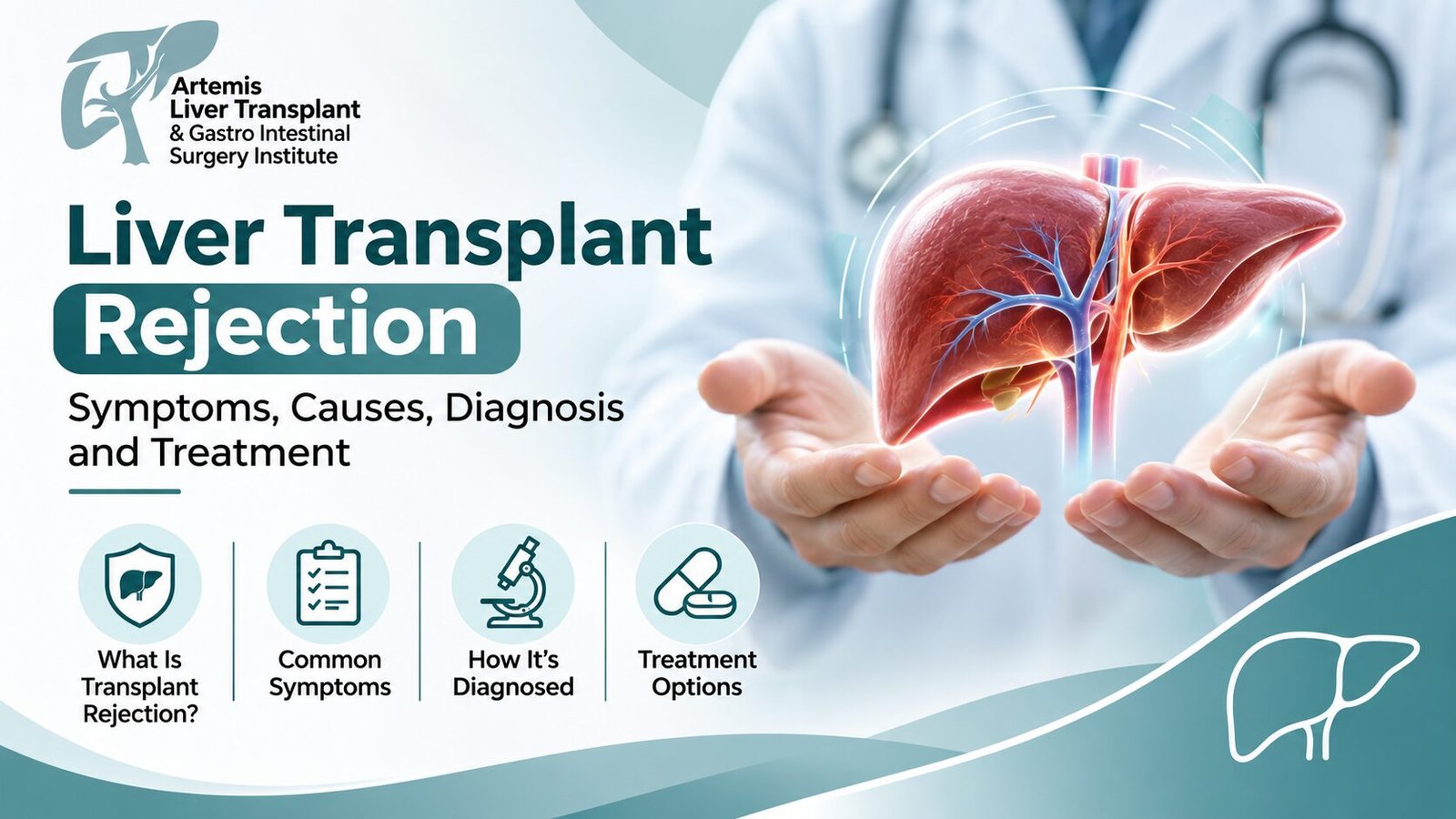
A liver transplant can be a life-saving treatment for people suffering from advanced liver disease or liver failure. However, receiving a new liver does not mean that medical care ends after surgery. Patients need regular monitoring, prescribed medications, and long-term follow-up to maintain the health of the transplanted organ.
One of the complications that patients and their families should understand is liver transplant rejection.
Rejection occurs when the recipient’s immune system recognises the transplanted liver as foreign and starts attacking it. Although this can sound alarming, rejection can often be managed when identified early and treated appropriately.
Understanding the symptoms, causes, diagnosis, and treatment options can help patients take an active role in protecting their transplanted liver.
If you or a family member has undergone transplantation, knowing about liver transplant rejection is an important part of long-term post-transplant care.
What Is Liver Transplant Rejection?
Liver transplant rejection is a condition in which the recipient’s immune system reacts against the transplanted liver.
The immune system normally protects the body from infections and foreign substances. After transplantation, it may recognise the donor liver as foreign tissue and trigger an immune response.
To reduce this risk, transplant recipients are prescribed immunosuppressant medications. These medicines help control the immune response and reduce the possibility of organ rejection.
However, rejection can still occur despite medication, which is why regular medical follow-up is essential.
It is important to understand that not every abnormal liver function test after transplantation means rejection. Infections, medication toxicity, bile duct problems, and vascular complications can also affect liver function.
A transplant specialist must determine the actual cause.
What Are the Different Types of Liver Transplant Rejection?
Liver transplant rejection can occur in different forms depending on when it develops and the type of immune response involved.
1. Acute Cellular Rejection
Acute cellular rejection, also called T-cell-mediated rejection, is one of the recognised forms of rejection following liver transplantation.
It can occur during the early months after surgery but may also develop later.
In this condition, immune cells attack the transplanted liver tissue, causing inflammation and potentially affecting liver function.
With timely diagnosis and appropriate treatment, many episodes can be successfully managed.
2. Chronic Rejection
Chronic rejection is a less common but potentially serious complication that develops over a longer period.
It can involve progressive damage to the bile ducts and blood vessels within the transplanted liver.
Over time, chronic rejection may lead to worsening liver function and, in some cases, graft failure.
Early recognition and specialist management are important.
3. Antibody-Mediated Rejection
Antibody-mediated rejection is an immune-related complication involving antibodies directed against the donor organ.
It is less common than conventional acute cellular rejection and requires specialised evaluation.
Doctors may use blood tests, antibody testing, imaging, and liver biopsy findings to assess whether this condition is present.
What Are the Symptoms of Liver Transplant Rejection?
One of the challenges with liver transplant rejection is that some patients may not experience obvious symptoms initially.
In certain cases, changes in liver function tests may be the first indication of a problem.
However, possible warning signs include:
1. Jaundice
Yellowing of the skin or eyes may occur when bilirubin levels increase.
Jaundice can indicate impaired liver function, but it can also result from other post-transplant complications.
2. Dark-Coloured Urine
Urine that becomes unusually dark may be associated with increased bilirubin levels and should be medically evaluated.
3. Fever
An unexplained fever after liver transplantation requires prompt medical assessment.
It may indicate rejection, infection, or another complication.
4. Abdominal Pain or Discomfort
Some patients may experience discomfort around the upper right side of the abdomen, where the liver is located.
Persistent or worsening abdominal pain should not be ignored.
5. Fatigue and Weakness
Unusual tiredness, reduced energy, or general weakness may occur when liver function is affected.
These symptoms are not specific to rejection and require further investigation.
6. Loss of Appetite and Nausea
Some patients may experience reduced appetite, nausea, or vomiting.
If these symptoms are persistent or accompanied by jaundice or fever, contact the transplant team.
Important: Symptoms alone cannot confirm liver transplant rejection. Patients should contact their transplant team promptly if they notice new or worsening symptoms rather than adjusting medications themselves.
What Causes Liver Transplant Rejection?
Several factors may contribute to an increased risk of rejection.
1. Missing Immunosuppressant Medication
One of the important preventable risk factors is missing prescribed immunosuppressant doses.
These medicines help prevent the immune system from attacking the transplanted liver.
Skipping doses or stopping medication without medical advice can increase the risk of rejection.
2. Incorrect Medication Dosage
Taking less medication than prescribed or making unsupervised changes to the treatment schedule may reduce the effectiveness of immunosuppression.
Patients should follow the exact instructions provided by their transplant specialist.
3. Drug Interactions
Certain medicines, herbal products, and supplements can affect the levels of immunosuppressant drugs in the blood.
Patients should inform their transplant team before starting any new medication or supplement.
4. Immune System Response
Even when patients follow their treatment plan correctly, the immune system may sometimes react against the donor liver.
This is why rejection cannot always be prevented.
5. Inadequate Medical Monitoring
Regular blood tests and follow-up consultations help doctors identify changes in liver function.
Missing scheduled appointments may delay the identification of complications.
How Is Liver Transplant Rejection Diagnosed?
Accurate diagnosis is essential because several conditions can produce similar symptoms or abnormal liver function test results.
A transplant specialist may recommend the following investigations.
1. Liver Function Tests
Blood tests help evaluate the health and functioning of the transplanted liver.
Commonly assessed parameters include:
- ALT (Alanine Aminotransferase).
- AST (Aspartate Aminotransferase).
- ALP (Alkaline Phosphatase).
- GGT (Gamma-Glutamyl Transferase).
- Bilirubin.
- Albumin.
- Prothrombin time and INR.
Changes in these values may indicate liver injury, but they do not independently confirm rejection.
2. Immunosuppressant Drug Level Monitoring
Doctors may measure the blood concentration of medicines such as tacrolimus or cyclosporine.
This helps determine whether medication levels are within the patient’s prescribed target range.
The target varies according to the transplant centre’s protocol, time since transplantation, and individual clinical circumstances.
3. Ultrasound with Doppler
Ultrasound with Doppler can assess blood flow through the transplanted liver and help identify certain vascular complications.
It may also provide information about the liver and surrounding structures.
4. Liver Biopsy
A liver biopsy involves collecting a small tissue sample from the transplanted liver for examination.
It is an important investigation for diagnosing and classifying many forms of liver transplant rejection.
The biopsy helps doctors identify characteristic inflammatory and tissue changes.
It may also help distinguish rejection from other causes of liver injury.
5. Additional Investigations
Depending on the patient’s condition, doctors may recommend additional investigations to evaluate infections, bile duct complications, or antibody-related problems.
The diagnostic plan is personalised according to the patient’s medical history and test results.
How Is Liver Transplant Rejection Treated?
Treatment depends on the type and severity of rejection, the patient’s overall health, and the results of diagnostic investigations.
The objective is to control the immune response while protecting the transplanted liver.
1. Adjustment of Immunosuppressant Medication
Doctors may modify the dosage or combination of immunosuppressant medicines depending on the patient’s condition.
Commonly used medicines include:
- Tacrolimus.
- Cyclosporine.
- Mycophenolate mofetil.
- Corticosteroids.
Not every patient requires all these medicines. The treatment plan is individually determined by the transplant team.
2. Corticosteroid Treatment
For certain episodes of acute cellular rejection, doctors may prescribe corticosteroids to reduce inflammation and suppress the immune response.
The dose, duration, and route of administration depend on the severity of rejection.
3. Advanced Immunosuppressive Treatment
In selected cases where rejection does not respond adequately to initial treatment, specialists may consider additional therapies.
These may include antibody-based treatments or other specialised immunosuppressive approaches.
Treatment decisions require careful assessment because stronger immunosuppression can increase the risk of infections and other complications.
4. Management of Associated Complications
Patients may also require treatment for associated infections, medication-related side effects, or other conditions affecting liver function.
Close monitoring is important throughout treatment.
Can Liver Transplant Rejection Be Prevented?
Not every rejection episode can be prevented. However, following the prescribed post-transplant care plan can help reduce certain preventable risks.
Here are some important precautions.
1. Take Medicines on Time
Follow the immunosuppressant schedule exactly as prescribed. Never stop or change medication without consulting your transplant specialist.
2. Attend Regular Follow-Up Appointments
Scheduled consultations and blood tests help monitor liver function and medication levels.
3. Avoid Self-Medication
Some over-the-counter medicines, herbal remedies, and supplements may interact with transplant medications.
Always consult your transplant team before taking anything new.
4. Follow Food and Hygiene Recommendations
Maintain good food hygiene, wash your hands regularly, and follow the infection-prevention advice provided by your transplant centre.
5. Report Unusual Symptoms Early
Fever, jaundice, dark urine, abdominal discomfort, or unusual weakness should be reported promptly.
6. Maintain a Healthy Lifestyle
Follow an individualised nutrition and physical activity plan recommended by your transplant team.
Avoid alcohol unless your transplant specialist has specifically advised otherwise; in general, alcohol should be avoided after liver transplantation.
Is Liver Transplant Rejection Curable?
The outcome depends on the type, severity, and timing of rejection.
Many episodes of acute cellular rejection respond to appropriate treatment, particularly when identified early.
However, chronic rejection can be more difficult to manage and may cause progressive damage to the transplanted liver.
In severe cases, where graft function cannot be maintained, repeat liver transplantation may be considered after a detailed specialist assessment.
Every patient has a different clinical situation, so outcomes cannot be predicted from symptoms alone.
What Is the Importance of Long-Term Follow-Up After Liver Transplantation?
A liver transplant requires lifelong medical supervision.
Even when patients feel healthy and their liver function tests are stable, regular monitoring remains important.
Long-term follow-up may include:
- Routine liver function tests.
- Immunosuppressant drug level monitoring.
- Kidney function assessment.
- Blood pressure and blood sugar monitoring.
- Screening for infections.
- Monitoring for medication side effects.
- Nutritional assessment.
- Evaluation of any new symptoms.
Consistent follow-up allows the transplant team to identify potential complications and make treatment adjustments when required.
When Should You Contact Your Liver Transplant Specialist?
Patients should contact their transplant team promptly if they experience:
- Yellowing of the skin or eyes.
- Unexplained fever.
- Persistent abdominal pain.
- Dark urine or pale stools.
- New or worsening weakness.
- Persistent nausea or vomiting.
- Changes in prescribed medication intake.
- Unexpected changes in liver function test results.
Seek emergency medical attention for severe abdominal pain, confusion, difficulty breathing, significant bleeding, or other rapidly worsening symptoms.
Do not wait for the next scheduled appointment if concerning symptoms develop.
Consult Dr. Giriraj Singh Bora for Liver Transplant Evaluation and Care
Managing complications after liver transplantation requires specialist knowledge, careful monitoring, and a personalised treatment approach.
Dr. Giriraj Singh Bora is Chief and Senior Consultant in Minimal Access HPB Surgery and Liver Transplant at Artemis Hospital, Gurugram.
His areas of expertise include:
- Living donor liver transplantation.
- Deceased donor liver transplantation.
- Advanced laparoscopic donor surgery.
- Robotic liver donor surgery.
- Hepato-Pancreato-Biliary (HPB) surgery.
- Complex gastrointestinal surgery.
- Liver and biliary cancer surgery.
With extensive experience in liver transplantation and advanced HPB surgery, Dr. Bora provides specialist evaluation and treatment planning for patients with complex liver conditions.
Patients experiencing concerns after transplantation should seek assessment from their transplant team or a qualified liver transplant specialist.
Book a Specialist Consultation
Dr. Giriraj Singh Bora
Liver Transplant & HPB Surgery
Artemis Hospital, Gurugram, Haryana
Website: https://livertransplantinstitute.com/
Frequently Asked Questions (FAQs)
1. What is liver transplant rejection?
Liver transplant rejection occurs when the recipient’s immune system recognises the transplanted liver as foreign tissue and attacks it. It can affect the functioning of the transplanted organ.
2. How soon can liver transplant rejection occur?
Rejection can occur during the early period after transplantation or months and years later. The timing depends on several medical and immunological factors.
3. What are the first signs of liver transplant rejection?
Some patients have no obvious symptoms initially. Changes in liver function tests may be the first indication. Other possible signs include jaundice, fever, fatigue, abdominal discomfort, and dark urine.
4. Can liver transplant rejection be treated?
Yes. Many episodes of acute cellular rejection can be treated through adjustments in immunosuppressant medication and other specialist-directed therapies.
5. Do liver transplant patients need lifelong medication?
Most liver transplant recipients require long-term, generally lifelong, immunosuppressant medication to reduce the risk of rejection. The treatment regimen may change over time under medical supervision.
6. Can rejection occur even when medicines are taken regularly?
Yes. Rejection can sometimes occur despite correct medication use because of individual immune responses and other clinical factors.
7. Does liver transplant rejection always require another transplant?
No. Many rejection episodes can be managed without repeat transplantation. Another transplant may be considered only in selected cases involving severe or irreversible graft damage.
8. How often should liver transplant patients undergo blood tests?
The frequency depends on the time since transplantation, medication levels, liver function, and individual medical requirements. Follow the monitoring schedule recommended by your transplant team.
Conclusion
Liver transplant rejection is an important complication that patients and families should understand as part of long-term transplant care.
Although rejection can affect the functioning of a transplanted liver, timely diagnosis and appropriate treatment can help manage many episodes.
Taking immunosuppressant medications regularly, attending scheduled follow-up appointments, and reporting unusual symptoms early are essential parts of post-transplant care.
If you or a family member has undergone liver transplantation and is experiencing unusual symptoms or abnormal liver function tests, consult the transplant team promptly.

