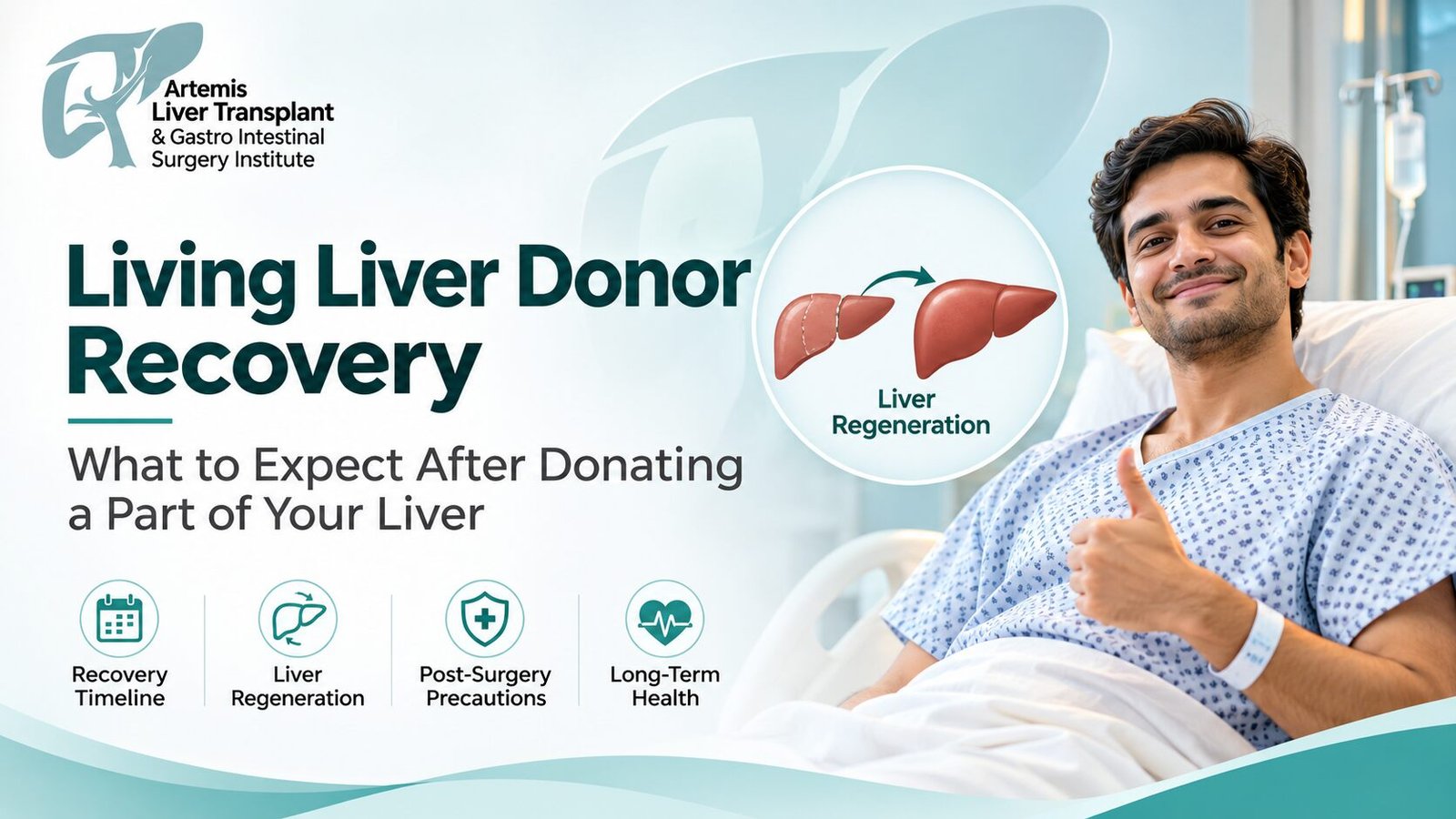
Living donor liver transplantation has become an important treatment option for patients suffering from advanced liver disease and liver failure. In this procedure, a healthy individual donates a portion of their liver to someone who needs a transplant.
One of the most common concerns among potential donors is: What happens to my body after donating a part of my liver?
The liver has a remarkable ability to regenerate. However, donation is a major surgical procedure that requires careful medical evaluation, proper postoperative care and regular follow-up.
Understanding the living liver donor recovery process can help individuals make informed decisions and prepare for life after donation.
What Happens During Living Donor Liver Transplant Surgery?
Living donor liver transplantation involves removing a suitable portion of a healthy donor’s liver and transplanting it into a recipient whose liver is severely damaged or failing.
The remaining liver tissue in the donor continues performing essential functions while gradually regenerating.
Before surgery, potential donors undergo detailed medical and psychological assessments to determine whether donation is appropriate and safe for them.
The evaluation generally includes:
- Blood tests and liver function assessment.
- Imaging studies such as CT scans and MRI.
- Assessment of liver size and anatomy.
- Evaluation of overall physical health.
- Blood group compatibility and other medical assessments.
- Psychological counselling and informed consent.
Read more about Living Donor Liver Transplantation and the donor evaluation process.
How Does the Liver Regenerate After Donation?
One of the most remarkable features of the human liver is its ability to regenerate.
Unlike many other organs, the liver can restore much of its lost volume through the growth of existing liver cells.
After a portion of the liver is removed during donation, the remaining liver tissue begins adapting and growing to meet the body’s metabolic requirements.
Liver regeneration generally occurs in stages:
1. Early Regeneration
The regeneration process begins shortly after surgery. Liver cells respond to changes in liver volume and begin increasing their activity.
2. Progressive Growth
During the following weeks and months, the remaining liver tissue continues growing and adapting to support normal liver function.
3. Long-Term Adaptation
Liver volume and function continue adjusting over time. The exact regeneration timeline varies depending on individual health, the amount of liver removed and other medical factors.
It is important to understand that liver volume regeneration and complete functional recovery are not exactly the same thing.
How Long Does It Take to Recover After Liver Donation?
Recovery after living donor liver transplant surgery varies from person to person. Factors such as age, general health, surgical approach and postoperative complications can influence the recovery period.
Here is a general overview:
First Week After Surgery
The donor remains under close medical observation in the hospital. The healthcare team monitors liver function, pain, wound healing and overall recovery.
Patients are usually encouraged to begin gentle movement as soon as medically appropriate.
Second to Fourth Week
After discharge, donors gradually resume basic daily activities. Adequate rest, prescribed medication and follow-up appointments remain important.
Heavy physical activities should be avoided until the treating surgeon gives clearance.
One to Three Months
Many donors gradually return to their normal routines during this period. Energy levels and physical strength continue improving.
The exact time required to return to work depends on the individual’s recovery and the nature of their occupation.
Long-Term Recovery
Regular medical follow-ups help assess liver function, overall health and any complications that may develop after surgery.
Learn more about Life After Donation and the recovery guidance available for living liver donors.
What Precautions Should Living Liver Donors Take After Surgery?
Postoperative care plays an important role in ensuring a smooth recovery.
Some important precautions include:
1. Follow Medical Instructions
Take all prescribed medicines and attend scheduled follow-up appointments. Never change medication without consulting your doctor.
2. Maintain a Balanced Diet
Eat a nutritious and balanced diet that supports healing and overall health. Follow any specific dietary recommendations provided by your medical team.
3. Avoid Heavy Lifting
Avoid strenuous activities and heavy lifting until your surgeon confirms that it is safe to resume them.
4. Gradually Increase Physical Activity
Start with gentle walking and gradually increase activity according to medical advice.
5. Avoid Alcohol Unless Medically Cleared
Discuss alcohol consumption with your treating specialist and follow their recommendations.
6. Monitor Warning Signs
Seek medical attention if you experience fever, worsening abdominal pain, jaundice, persistent vomiting, wound discharge or unusual weakness.
Early medical assessment can help identify and manage potential complications.
Can Living Liver Donors Live a Normal Life?
Most carefully selected living liver donors are able to return to their regular activities after recovery.
However, donation involves major surgery and is not completely risk-free.
Potential complications may include:
- Bleeding or infection.
- Bile leakage.
- Blood clots.
- Wound-related complications.
- Persistent abdominal discomfort.
- Psychological or emotional difficulties.
The likelihood and severity of complications vary between individuals.
This is why comprehensive donor evaluation, experienced surgical care and long-term medical follow-up are essential.
Potential donors should have an opportunity to discuss the benefits, risks and alternatives before making their decision.
Why Is Long-Term Follow-Up Important After Liver Donation?
Recovery does not end when a donor leaves the hospital.
Regular follow-up allows doctors to assess liver function, monitor physical recovery and identify potential health concerns.
Follow-up may include:
- Liver function tests.
- Complete blood count.
- Physical examinations.
- Imaging studies when clinically indicated.
- Assessment of pain, fatigue and general well-being.
- Psychological support when required.
Even when donors feel completely healthy, attending recommended medical check-ups remains important.
Frequently Asked Questions About Living Liver Donor Recovery
1. Does the liver grow back after donating a portion?
Yes. The liver has a remarkable regenerative capacity. The remaining liver tissue grows and adapts after donation, although regeneration of liver volume is not identical to restoration of its original anatomy.
2. How long does a living liver donor stay in the hospital?
Many living liver donors stay in the hospital for approximately one week. However, the duration depends on their recovery and the medical team’s assessment.
3. When can a liver donor return to work?
Some donors return to work within four to six weeks, while others may require additional recovery time. The timeline depends on the individual’s health and job requirements.
4. Is living liver donation completely safe?
No major surgery is completely risk-free. Living liver donation involves potential complications, which is why detailed screening, informed consent and specialist surgical care are essential.
5. Will a liver donor need regular medical check-ups?
Yes. Regular follow-up helps monitor liver function, recovery and long-term health. Donors should follow the schedule recommended by their transplant team.
6. Can someone donate a part of their liver and continue living normally?
Many donors return to their regular lives after recovery. However, individual outcomes vary, and ongoing medical advice and follow-up remain important.
Conclusion
Living donor liver transplantation offers an important treatment opportunity for patients with advanced liver disease. However, the well-being of the donor is equally important throughout the process.
Understanding liver regeneration, recovery timelines, postoperative precautions and long-term follow-up can help potential donors make informed decisions.
If you or a family member is considering living donor liver transplantation, consult an experienced liver transplant specialist to understand the eligibility criteria, surgical process and associated risks.
For expert guidance, connect with Dr. Giriraj Singh Bora, a liver transplant and HPB surgery specialist.

